2025 New Year Machine Embroidery
A Practical Review for Small Business Merchandise & Branded Patches
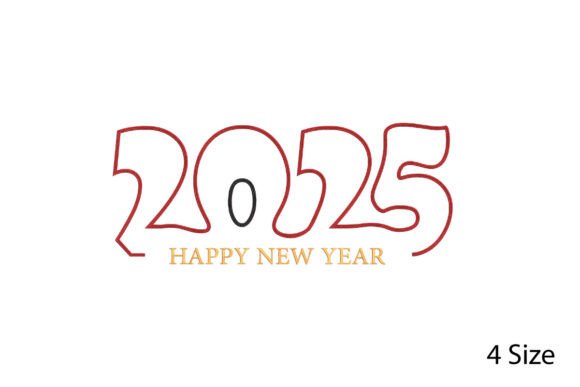
As an embroidery designer who’s developed hundreds of commercial designs for cafés, boutiques, bakeries, florists, and handmade brands, I approach every new year design with two questions: Will it strengthen brand identity on real-world merchandise? and Does it translate cleanly from digital file to stitched patch, cap, or apron? The 2025 New Year Machine Embroidery lands squarely in the “versatile starter asset” category — not overly ornate, not minimalist to the point of blandness. Based on its title and description, it reads as friendly, modern, and purpose-built — designed for celebration without sacrificing professionalism. That balance is critical when your small business uses embroidery to signal quality, consistency, and care.
Where It Shines: Real-World Business Applications
The 2025 New Year Machine Embroidery works exceptionally well across high-impact small business merch categories. For a local café launching limited-edition mugs and staff aprons, this design serves as a subtle chest accent — clean enough to pair with existing logo placement, celebratory enough to mark the season. On tote bags for a boutique or florist, it reads clearly at 3–4 inches wide without overwhelming the fabric. As an embroidered patch, it holds up beautifully when sewn onto denim jackets, canvas aprons, or reusable shopping totes — especially when paired with contrasting thread colors that pop against natural or dark textiles.
For custom apparel like work shirts or caps, the design’s likely moderate stitch density (inferred from its home-textile orientation) means it won’t buckle or pucker on structured twills or cotton blends — a common pain point with over-dense holiday motifs. It also adapts well to apron embroidery and cap embroidery when sized appropriately: 2.25" wide fits comfortably on most front panels without distortion. And because it’s offered in multiple file formats, shops using Brother, Janome, Bernina, or commercial Tajima machines can integrate it directly into production workflows — no costly digitizing retouches needed.
Small business owners selling on Etsy or through craft fairs will find this digital embroidery file especially valuable for creating cohesive product lines: think branded tea towels + matching oven mitts + embroidered gift tags. When used consistently, the 2025 New Year Machine Embroidery becomes part of a visual language — reinforcing seasonal relevance while staying anchored in your brand’s voice. That consistency builds customer trust: shoppers recognize your attention to detail, and they associate your handmade product with intentionality, not just decoration.
Where to Use It Thoughtfully
Like any machine embroidery design, the 2025 New Year Machine Embroidery has boundaries. Avoid scaling it below 1.75" for patches or sleeve details — fine outlines or tight numerals may lose clarity, especially on textured fabric like terry cloth or heavy canvas. Cap fronts with steep curvature require careful hooping; test first on scrap material to ensure letter spacing remains even and no elements distort near the bill seam.
Dark uniforms? Prioritize high-contrast thread colors — metallic silver or bright white over navy or charcoal improves legibility and perceived polish. If your business relies on frequent washing (e.g., restaurant aprons or daycare staff shirts), confirm the design doesn’t include ultra-fine satin stitches or dense fill areas that could abrade over time. Also, verify whether the file includes underlay stitching optimized for stability — crucial for long-term durability in commercial embroidery settings.
Design Assets & Brand Identity Alignment
This isn’t just a decorative motif — it’s a functional piece of your design assets. Used alongside your primary logo, color palette, and typography, the 2025 New Year Machine Embroidery extends your brand story into seasonal moments without diluting core identity. A pet brand might pair it with paw-print accents; a bakery could layer it beside a custom croissant icon. That flexibility supports visual consistency while keeping offerings fresh — key for buyer engagement and repeat sales.
Importantly, it avoids the “clip-art” trap. Its implied compatibility with home textiles (pillows and towels) suggests balanced proportions and intentional negative space — traits that scale well to product packaging accents or embroidered gift tags. That elevates perceived product value: customers don’t just see a date; they see craftsmanship, timing, and attention to context.
Essential Designer Notes Before Production
Before stitching your first batch, follow these field-tested steps:
- Test in black and white first — confirms readability and contrast without color bias.
- Check performance at your target patch size — especially if using 1.5"–2" embroidered patches for tote bag labels or uniform accents.
- Review thread color options — does the design rely on subtle gradients or delicate shading? If so, simplify for better stitch fidelity.
- Inspect spacing between elements — tight kerning on “2025” or “New Year” can collapse on low-thread-count fabrics.
- Confirm hoop size requirements — some multi-part designs need larger hoops than standard 4x4 or 5x7 frames.
- Test on your actual fabric — a linen blend behaves differently than duck canvas or polyester twill.
- Use appropriate stabilizer — cutaway for stretchy knits, tear-away for stable wovens, and fusible for lightweight silks or voiles.
- Create a printable mockup for client approval — helps avoid misalignment or sizing surprises pre-production.
- Compare it beside other design assets — does it harmonize with your logo, fonts, and seasonal palette?
- Confirm commercial licensing — since this is intended for small business merch, custom apparel, and commercial embroidery, verify usage rights cover resale, branding, and distribution.
Remember: the 2025 New Year Machine Embroidery isn’t meant to stand alone forever — it’s a timely, adaptable tool. Used intentionally, it adds warmth to your brand narrative, signals attentiveness to cultural moments, and delivers tangible value across apparel, accessories, and product labeling. Whether you’re a solo craftsperson or a growing embroidery shop, this design earns its place in your 2025 toolkit — not as decoration, but as deliberate, business-ready embroidery.