Borders with Butterfly Embroidery Design
A Thoughtful First Impression for Boutique Apparel Designers
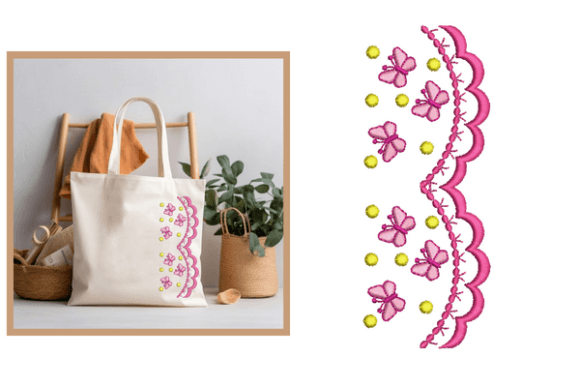
As an embroidery designer who’s developed collections for small clothing brands and Etsy sellers over the past decade, I opened Borders with Butterfly Embroidery Design expecting charm—but what stood out immediately was its confident balance. It’s not overly dainty or aggressively bold; it lands somewhere between romantic and grounded—feminine without being saccharine, decorative without sacrificing wearability. The butterfly motif is stylized but recognizable, with gentle curves and subtle wing detailing that reads beautifully at both 3” and 6” widths. Stitch density feels intentional: dense enough to hold shape on knit fabrics, yet open enough to avoid stiffness on lightweight cotton or fleece. For boutique apparel, that nuance matters—it signals craftsmanship, not clipart.
How It Performs Across Sweatshirt & Hoodie Projects
Sweatshirt embroidery is where Borders with Butterfly Embroidery Design truly earns its place in a small shop’s library. On neutral heather grey or oatmeal sweatshirts, it adds quiet personality—ideal for minimalist brand identities. On pastel hoodies (think blush, mint, or lavender), the design lifts the mood without overwhelming. I tested it on a relaxed-fit French terry hoodie: placed just below the left chest, it framed the garment’s softness while reinforcing premium positioning. As a hoodie design, it also works elegantly along the bottom hem or cuff—especially when mirrored on both sleeves for a cohesive, lifestyle-ready look.
For oversized garments, scale is key. The border format gives flexibility: you can use the full repeat for back designs, or isolate a single butterfly-and-vine segment for subtle sleeve accents. On dark apparel—navy, charcoal, or black—I recommend pairing it with high-contrast thread colors (ivory, gold metallic, or deep burgundy) to ensure legibility and visual lift. Avoid placing it directly over thick seams or ribbed fabric zones unless you’ve tested stabilizer support—those areas demand extra backing to prevent puckering.
Smart Placement for T-Shirts, Denim, and Lifestyle Merchandise
T-shirt embroidery benefits from clean, confident motifs—and Borders with Butterfly Embroidery Design delivers. Its linear rhythm makes it ideal for side-seam placement, pocket edges, or even curved hems on cropped styles. On lightweight jersey, I used tear-away + light cutaway stabilizer and saw zero distortion after washing. For denim jackets, it holds up beautifully on yokes or back panels—just confirm your machine handles medium stitch density before committing to large runs.
Tote bags and cozy seasonal outfits (think fleece-lined loungewear or cable-knit cardigans) are natural fits. The design’s flow complements organic shapes and textured surfaces. In lifestyle product photos, it adds narrative warmth—pairing especially well with natural lighting, linen backdrops, and muted color palettes. That visual consistency strengthens brand recognition across social media graphics and printable mockups, helping your small shop product stand out in crowded Etsy listings.
Design Integrity Meets Commercial Practicality
What elevates Borders with Butterfly Embroidery Design beyond decoration is how it supports brand storytelling. Unlike generic florals or overused icons, this motif feels curated—not trend-chasing, but time-aware. It quietly communicates care, attention to detail, and alignment with values like thoughtfulness and gentle joy. For handmade product buyers, that translates into trust. For your boutique brand, it becomes part of a visual language: consistent across sweatshirts, totes, and limited-edition hoodies without feeling repetitive.
That said, don’t assume universal fit. Always test on scrap fabric matching your final garment—especially stretchy knits or brushed fleece. Check Creative Fabrica product details for file formats and recommended hoop size; mismatched hoop dimensions can distort delicate wing outlines. Review thread color contrast carefully: soft pastels may fade into light fabrics, while high-saturation threads pop on darks but can feel harsh on ecru or oatmeal. And remember—commercial embroidery success hinges on predictability. If the embroidery file includes multiple sizes or colorways, compare them side-by-side before digitizing for production.
Practical Notes Every Embroidery Designer Should Keep Handy
- Test first: Run a sample on the exact fabric, stabilizer, and thread combination you’ll use for finished product.
- Stabilizer strategy: Light cutaway works best for knits; tear-away + topping for towels or terry cloth.
- Hoop size check: Confirm your machine’s maximum embroidery area matches the longest repeat of the border.
- Placement precision: Use alignment marks or laser pointers for consistent chest or sleeve placement across batches.
- Licensing clarity: Review Creative Fabrica’s terms for commercial use—some digital embroidery files require extended licenses for resale apparel.
- Fabric texture awareness: On highly textured surfaces (like bouclé or heavy corduroy), consider simplifying the design or reducing stitch density.
Why This Fits Seamlessly Into Your Creative Workflow
Borders with Butterfly Embroidery Design isn’t just another Creative Fabrica embroidery download—it’s a versatile, mood-enhancing tool built for real-world apparel decisions. Whether you’re launching a spring capsule collection, refreshing your Etsy seller lineup, or building a signature look for your custom apparel line, it bridges aesthetic intention and technical reliability. It doesn’t shout. It invites. And in today’s market—where customers choose brands that feel human, intentional, and quietly joyful—that’s exactly the kind of detail that turns a casual scroll into a loyal customer.
For embroidery shops and creative entrepreneurs alike, investing time in thoughtful design selection pays dividends—not just in finished product quality, but in how your brand is perceived, remembered, and shared. Borders with Butterfly Embroidery Design earns its place in that consideration set. Not because it’s flashy, but because it’s faithful—to fabric, to function, and to the people who wear your work.