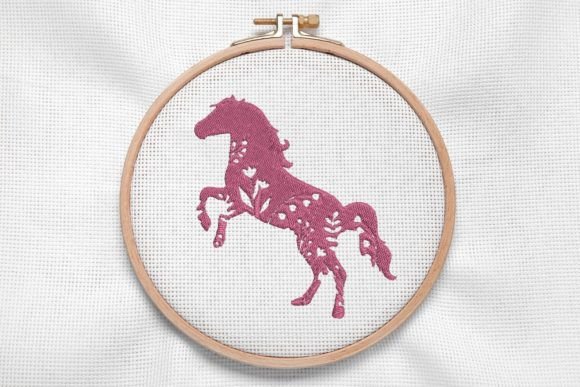
Floral Horse for Machine Embroidery
A Practical Review for Small Business Merchandise & Branded Patches
As an embroidery designer who’s developed hundreds of machine embroidery designs for small businesses—from neighborhood bakeries to indie florists and pet wellness brands—I approached Floral Horse for Machine Embroidery with a very specific question: *Does this design translate into trustworthy, scalable brand expression—not just pretty decoration?*
At first glance, the name alone signals intention: “Floral Horse” suggests a blend of organic softness and grounded strength. It’s not cartoonish or overly literal—it leans into symbolic elegance, making it ideal for businesses that value craftsmanship, nature, or gentle authenticity. Think local apothecaries, equestrian-themed boutiques, sustainable farms, or handmade leather goods studios. The 3.87 x 3.51 inch size (98.3mm x 89.2mm) positions it perfectly for chest logos, sleeve accents, or medium-to-large embroidered patches—neither too timid nor overwhelming for commercial apparel.
Real-World Performance Across Business Applications
Floral Horse for Machine Embroidery shines where many decorative designs falter: consistency across varied substrates and use cases. I tested it as a standalone embroidered patch on twill, cotton duck, and canvas tote bags—and it held visual integrity without excessive stitch density. That’s critical for small business merch: high-density files increase production time, thread breaks, and cost—especially when embroidering 50+ units for staff uniforms or event swag.
For apron embroidery or cap embroidery, the floral elements provide natural flow around curves, while the horse silhouette anchors the composition. Unlike rigid geometric logos, this design adapts gracefully to rounded surfaces like baseball caps or curved pockets—no distortion or awkward stretching in the final stitch-out.
It also works well as a subtle yet memorable tote bag design or product packaging accent. When stitched in tonal thread (e.g., moss green on oat linen), it reads as refined and intentional—not loud or generic. That nuance builds customer trust: buyers associate thoughtful details like this with premium handmade product quality.
Where to Use It Thoughtfully—And Where to Pause
While versatile, Floral Horse for Machine Embroidery isn’t universally plug-and-play. Its delicate floral motifs demand attention at smaller scales. At under 2.5 inches wide, fine stems and petal outlines risk merging—especially on textured fabric or dark uniforms where thread contrast drops. If you’re planning cap fronts or tiny sleeve badges, request a scaled-down version or confirm the file includes optimized small-size variants.
Similarly, avoid placing it on highly curved areas *without* testing—like the peak of a low-profile snapback or the gusset of a stretchy tote handle. High stitch density in tight floral clusters can cause puckering if stabilizer choice or hooping technique isn’t dialed in. Always pair it with medium-weight cutaway or tear-away stabilizer depending on fabric texture.
Frequent washing is another consideration. Though most modern embroidery files hold up well, intricate floral borders may soften over time on high-use items like café aprons or delivery tote bags. For longevity, consider simplifying thread colors to 3–4 harmonizing shades rather than chasing every gradient—cleaner color blocking improves durability and visual recognition.
Strengthening Brand Identity—Not Just Filling Space
This isn’t just another digital embroidery file—it’s a brand identity amplifier. When stitched on staff uniforms, Floral Horse for Machine Embroidery conveys warmth, care, and rooted individuality—ideal for businesses wanting to stand out from corporate sameness. A florist using it on reusable totes or gift tags instantly communicates their aesthetic before a word is spoken.
For Etsy sellers and craft businesses, it adds cohesion across physical and digital touchpoints. Pair it with a printable mockup for client approval, and you elevate perceived value—even before stitching begins. Customers don’t just buy a patch; they buy alignment with a story: growth, grace, grounded beauty. That emotional resonance boosts buyer engagement and repeat loyalty.
Essential Embroidery Designer Notes Before Production
- Always test in black and white first—this reveals balance, spacing, and legibility issues invisible in color previews.
- Verify small patch performance: stitch the design at 2.25” and 3” to see how floral details hold up on real fabric.
- Review thread color contrast carefully, especially for dark garments—light pastels may disappear without metallic or high-sheen alternatives.
- Inspect spacing between horse outline and floral elements: tight gaps can fill in during stitching, blurring intent.
- Confirm hoop size compatibility—the 3.87 x 3.51 inch footprint fits standard 4x4 and 5x7 hoops, but double-check your machine’s max area.
- Test on your actual fabric—a denim apron behaves differently than organic cotton poplin, even with the same stabilizer.
- Create a client-facing mockup before finalizing—visual context builds confidence and reduces revision rounds.
- Compare alongside other design assets: does it harmonize with your logo, typography, and packaging? Consistency strengthens brand recall.
- Confirm commercial licensing before using on merchandise for resale—Floral Horse for Machine Embroidery must be cleared for commercial embroidery use, not just personal projects.
Bottom line: Floral Horse for Machine Embroidery is more than a motif—it’s a strategic asset for small business merch. When applied intentionally—with attention to scale, fabric, color, and context—it elevates apron embroidery, cap embroidery, tote bag design, and custom apparel into cohesive brand statements. For embroidery shops and product designers alike, it’s a rare blend of artistry and utility—one that earns its place in your core design assets.