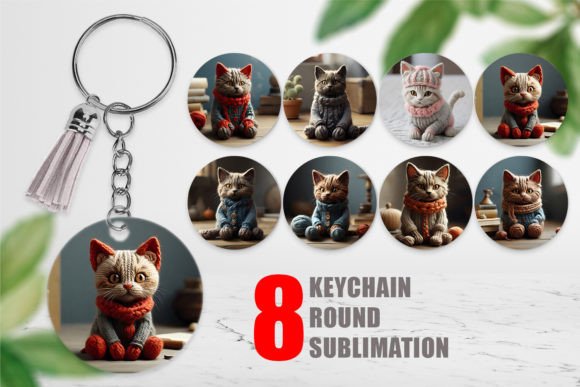
Keychain Cat Embroidery
First Impressions: Sweet, Simple, and Surprisingly Versatile
As an embroidery designer who’s tested hundreds of digital embroidery files for baby boutiques, wedding studios, and Etsy shops, I opened Keychain Cat Embroidery expecting a playful novelty—and was pleasantly surprised. The round, circle-background composition feels intentionally balanced—not too busy, not too sparse. It carries a gentle, handmade charm: soft curves, expressive eyes, and just enough detail to read clearly at small scale without overwhelming the fabric. It’s neither overly cutesy nor starkly modern—it lands in that sweet spot of timeless whimsy. Think nursery wall art meets heirloom kitchen towel. That mood makes it ideal for personalized gifts where emotional resonance matters more than trend-chasing.
Where This Design Truly Shines
Keychain Cat Embroidery isn’t just for keychains—despite its name. Its clean 2.53 x 2.53 inch footprint (760 x 760 px) translates beautifully to a wide range of finished products. As a designer building collections for baby product creators, I’ve used it on organic cotton swaddle blankets—stitched discreetly near the corner for subtle sweetness. For wedding gift designers, it adds quiet personality to linen pillow covers or monogrammed kitchen towels gifted to newlyweds. Etsy sellers tell me customers love it on custom tote bags for cat-loving bridesmaids or as a delicate accent on embroidered aprons for baking-themed baby showers.
Small shop owners appreciate how easily it integrates into cohesive lines: pair it with minimalist fonts for nursery decor bundles, layer it beside floral motifs for spring-themed craft fair kits, or use it as a consistent motif across blanket embroidery, embroidered towel sets, and pillow cover collections. Because it’s delivered as a high-res PNG set (8 files), it works seamlessly as a printable mockup for customer previews—no need to stitch first to show how it’ll look on a finished product.
Smart Pairings for Meaningful Personalization
- Baby embroidery: Ideal for onesies, burp cloths, and milestone blankets—especially when paired with soft pastel thread colors and lightweight stabilizer.
- Wedding gift: Stitched onto linen napkins or cotton drawstring bags holding favors—it reads as thoughtful, not kitschy.
- Family keepsakes: Works beautifully on memory pillows or framed hoop art commemorating pet loss or adoption.
- Nursery decor: Perfect for wall hangings, mobile accents, or coordinating crib sheet embroidery when scaled slightly larger.
- Custom order previews: Use the PNGs in Canva or Photoshop to generate realistic lifestyle mockups—boosting buyer engagement before stitching begins.
Where to Use Keychain Cat Embroidery Thoughtfully
This design is charming—but not universally forgiving. Its appeal depends on smart application. Avoid using it where fine details may blur or distort: on thick terry cloth towels (unless you reduce stitch density and add heavy cutaway stabilizer), stretchy baby bodysuits (the curved surface can cause puckering), or dark fabrics without testing thread contrast first. Delicate features—like the cat’s whiskers or inner ear lines—can disappear on textured fabrics like burlap or looped terry unless digitized with extra underlay or stitched with finer threads.
Also, remember: while the PNG files are optimized for sublimation printing, they’re not machine embroidery files out of the box. If you plan to stitch Keychain Cat Embroidery, you’ll need to digitize it—or source a compatible embroidery file separately. Always confirm commercial licensing before selling finished products, especially if reselling as part of a subscription box or curated gift set.
How It Elevates Your Handmade Product’s Perceived Value
In my experience reviewing designs for gift shop owners, Keychain Cat Embroidery stands out because it feels intentional—not generic. Customers notice that. When stitched cleanly on a premium cotton towel or linen pillow cover, it signals care, attention to detail, and brand consistency. That builds trust. It also photographs exceptionally well: the circular framing creates natural negative space, making product shots pop on Instagram or Etsy listings. Buyers engage longer when they can imagine the item in their home—a cozy nursery, a sunlit kitchen, a wedding dressing room.
For small business owners, that emotional connection directly impacts perceived value. A $24 embroidered towel with this design sells more confidently than one with a cluttered, low-resolution motif—even if both cost the same to produce. It tells your customer: “This wasn’t mass-produced. It was chosen with intention.”
Practical Embroidery Notes Before You Stitch
- Always test on scrap fabric—especially with your target material and thread colors.
- Check thread color contrast on both light and dark fabric mockups before finalizing.
- Confirm hoop size compatibility; the 2.53-inch diameter fits standard 4x4 hoops but may require re-hooping on smaller frames.
- Review stitch density—if digitizing yourself, keep fills open and satin stitches smooth to prevent fabric distortion.
- Use appropriate stabilizer: tear-away for stable wovens, cutaway for knits or towels.
- Inspect small details post-stitch: whiskers, pupils, and inner ear lines should remain crisp—not fuzzy or lost in thread buildup.
- Verify commercial use rights before listing finished goods on Etsy, Amazon Handmade, or wholesale platforms.
A Last Thought for Crafters and Sellers
Keychain Cat Embroidery is more than a cute graphic—it’s a versatile storytelling tool. In the Crafts and Graphics category, it bridges digital convenience with tangible warmth. Whether you’re an embroidery maker prepping for a holiday craft fair, a baby product creator building a signature line, or an Etsy seller refreshing your bestsellers, this design invites personalization without demanding perfection. It’s forgiving enough for beginners, refined enough for pros, and emotionally resonant enough to turn a simple towel or pillow cover into a keepsake. Just remember: great embroidery starts not with the file—but with thoughtful planning, fabric awareness, and respect for how real people will hold, use, and love the finished product.