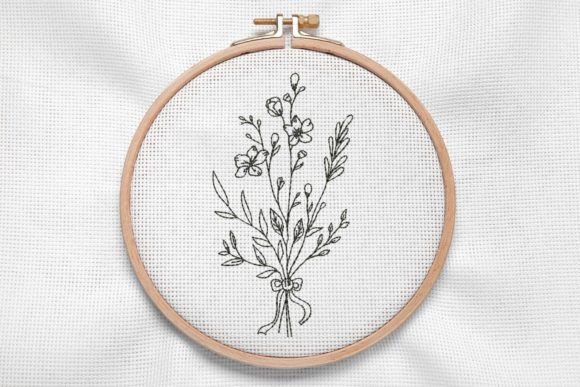
Wildflowers for Machine Embroidery
A Thoughtful First Impression for Boutique Apparel Designers
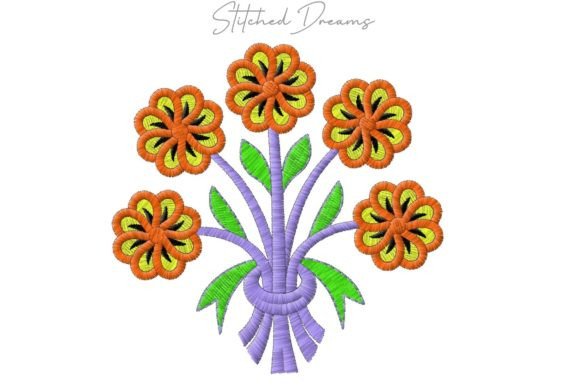
As an embroidery designer who’s stitched hundreds of collections for small clothing brands and Etsy sellers, I opened Wildflowers for Machine Embroidery expecting charm—but what stood out immediately was its quiet confidence. At 3.88 x 2.06 inches, it’s compact enough for chest placement on youth hoodies yet detailed enough to hold visual weight on oversized sweatshirts. The floral motif isn’t fussy or overly botanical; instead, it balances delicate stems with soft, rounded blooms—evoking a hand-painted sketch translated into stitch. It reads as feminine without being saccharine, rustic without feeling dated, and intentional without sacrificing warmth. That balance is rare in digital embroidery files—and critical when building a cohesive boutique brand.
How Wildflowers for Machine Embroidery Performs Across Apparel Types
For sweatshirt embroidery, this design shines on neutral heathers and oatmeals. Its moderate stitch density avoids stiffness, letting the fabric breathe while still delivering crisp definition. On dark garments—like charcoal fleece or navy French terry—I recommend high-contrast thread colors (ivory, pale sage, or warm taupe) to preserve legibility without overwhelming the surface.
For hoodie design, the size works perfectly centered above the left chest pocket or subtly angled on the sleeve cuff. Because the layout flows naturally from left to right, it adapts well to curved surfaces—no distortion on ribbed cuffs or tapered hems. On oversized hoodies, I’ve used it doubled (with slight spacing) across the back yoke for a modern, minimalist repeat—ideal for lifestyle product photos and printable mockups.
On t-shirt embroidery, especially lightweight cotton or slub jersey, I always test stabilizer first: a light tear-away paired with a topping for the flower centers prevents skipped stitches in dense areas. The stems are narrow enough to avoid puckering on stretchy knits, but the bloom clusters do require careful hooping—never force-stretch the fabric beneath the hoop.
For tote bag design and denim jackets, Wildflowers for Machine Embroidery adds artisanal polish without looking “crafty.” Its scale reads clearly at arm’s length, and the included formats—including PES, DST, and VP3—ensure compatibility across commercial and home machines used by small shop owners and contract embroiderers.
Where This Design Adds Real Value to Your Brand
When you’re curating a small shop product line, consistency matters more than variety. Wildflowers for Machine Embroidery supports visual continuity across categories: same motif on a linen tote, a cropped hoodie, and a relaxed tee signals intention—not randomness. That builds buyer trust. Customers begin recognizing your aesthetic before they see your logo.
It also elevates perceived value. A simple unbleached cotton sweatshirt gains tactile sophistication when finished with this design—especially when paired with matte thread and clean trimming. For Etsy sellers, that translates directly into stronger product recognition and higher conversion on social media graphics, where detail reads clearly even in thumbnail size.
Importantly, it works for seasonal storytelling. Pair it with cream-colored fleece joggers for spring, layer it over corduroy vests in fall, or anchor a cozy knit set with matching sleeve accents. It’s not trend-dependent—it’s timelessly adaptable.
Practical Designer Notes Before You Stitch
Before committing to production, here’s what I always check:
- Test on scrap fabric—especially if using fleece, ribbed fabric, or textured blends. Stitch density varies across floral elements, and subtle shifts in tension can affect petal clarity.
- Confirm hoop size: At just under 4 inches wide, it fits standard 4x4 hoops comfortably—but verify your machine’s actual stitching area, as some models cut off near the edge.
- Review stabilizer choice: Light to medium cut-away for stable fabrics like denim; tear-away + topping for knits. Avoid heavy fusibles—they mute the organic flow of the stems.
- Inspect thread color contrast: Pale threads on light fabrics often need a second pass or denser fill in bloom centers. Dark-on-dark requires precise digitizing—luckily, this file maintains clean jump stitches and smooth satin transitions.
- Compare placement options: Try it slightly off-center on t-shirts for asymmetry, or mirrored on both sleeves of a jacket for subtle branding.
- Check Creative Fabrica product details carefully—confirm licensing terms before selling finished apparel, and note whether commercial use is explicitly permitted for your intended sales channel.
Final Thoughts for Creative Entrepreneurs
If you're building a handmade product line—or refining your digital embroidery library for custom apparel—you’ll appreciate how Wildflowers for Machine Embroidery bridges versatility and voice. It doesn’t shout. It invites. It feels like part of a story rather than a standalone decoration.
For embroidery shops handling client work, it’s a reliable go-to for clients who want something soft but not childish, floral but not cliché. For small clothing brands launching their first capsule collection, it offers instant cohesion—without requiring custom digitizing budgets.
And for crafters balancing creativity with commerce? It’s proof that thoughtful design doesn’t have to mean complex execution. With clean file formatting, smart sizing, and expressive simplicity, Wildflowers for Machine Embroidery earns its place in a working designer’s toolkit—not just as a floral embroidery file, but as a quiet engine for brand-building.