Butterfly Egg Embroidery
A Craft Fair Designer’s First Look: Delicate, Festive, and Surprisingly Versatile
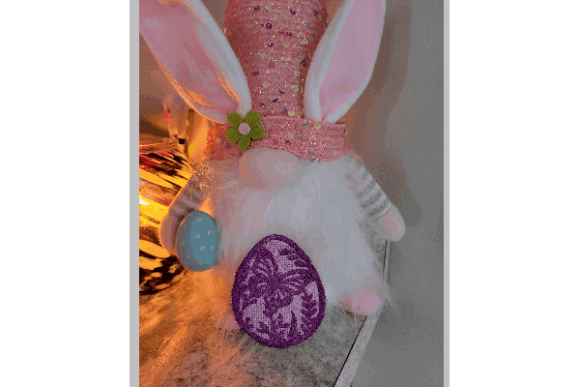
As someone who’s stitched over 300 craft fair booths—and watched which designs stop foot traffic versus which fade into the background—I opened Butterfly Egg Embroidery expecting a sweet Easter novelty. What I found was something sharper: a quietly confident design that balances whimsy with precision. It doesn’t shout “Easter!”—it invites closer looking. That’s gold at a handmade market. Customers don’t just buy holiday motifs; they buy *moments of delight*. This design delivers that in spades: soft curves, organic spacing, and a sense of gentle anticipation—like holding something fragile and full of promise. It reads as elegant, not cutesy; modern-farmhouse, not kitschy; premium, not generic.
Where Butterfly Egg Embroidery Truly Shines on Booth-Ready Products
In my booth setup—tote bags stacked, aprons draped over vintage crates, tea towels folded beside embroidered pouches—Butterfly Egg Embroidery stood out most when used intentionally, not everywhere. Here’s how it performed across key craft fair products:
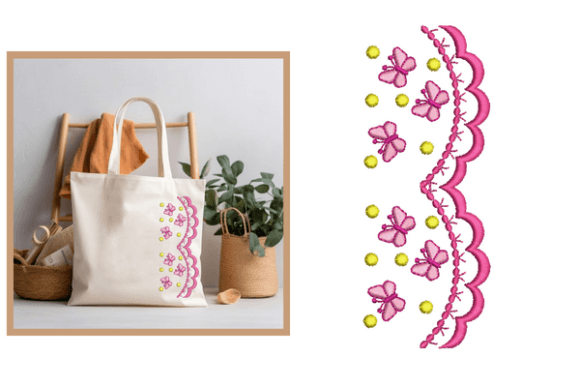
- Tote bag design: Perfect as a subtle side-panel accent (3.5"–4.5" wide) on natural canvas or oat linen. Not overpowering, but distinct enough to draw a second glance from 6 feet away.
- Apron embroidery: Ideal above the pocket or centered on the bib—especially on muted denim or unbleached cotton. The organic shape complements the human form better than rigid geometric motifs.
- Tea towel embroidery: A standout on flour-sack or Belgian linen. The design breathes on open-weave fabric, and its scale (when sized 3.75") avoids competing with towel texture.
- Embroidered patch: Excellent for iron-on or sew-on use on denim jackets, market bags, or kids’ backpacks. Holds detail well at 2.5", especially with satin-stitch outlining.
- Fabric pouch & pillow cover: Works beautifully as a single focal point—centered on a 9"x12" pouch or top-third placement on a 16" pillow cover. Feels intentional, not decorative clutter.
It underperformed on curved surfaces (like baseball caps) and dense fabrics (terry cloth, heavy twill) unless resized and stabilized carefully—more on that below.
Real-World Selling Strengths You Can’t Fake
This isn’t just another digital embroidery file—it’s a booth asset. Why?
- Instant readability: Even at 2.25", customers recognize it as a butterfly egg—not an abstract dot or blob. That clarity builds trust fast in a crowded aisle.
- Strong visual rhythm: Its asymmetry and gentle curve create movement on flat surfaces, helping your product stand out among grid-perfect logos and symmetrical florals.
- Etsy-ready appeal: Photographs cleanly against neutral backdrops. Looks equally compelling in natural light (craft fair tent) and studio lighting (Etsy listing). No harsh shadows or stitch bleed muddying the edges.
- Batch-friendly: Moderate stitch density means faster run times and less thread breakage during production—critical when embroidering 40+ tea towels before Saturday morning.
Careful-Use Notes Every Embroidery Business Owner Should Know
Don’t skip testing—this design rewards attention to detail:
- Dense areas: The central egg silhouette has tighter fill stitching. On textured towels or dark fabric, confirm thread contrast is strong (e.g., ecru thread on navy may disappear; off-white or pale gold pops).
- Small-scale limits: Below 2", delicate wing lines blur. Avoid using Butterfly Egg Embroidery smaller than 2.25" on patches or zipper pulls unless you’ve verified clarity on your machine.
- Stabilizer matters: Use medium-weight cutaway for knits (aprons, tote straps) and tear-away for stable wovens (tea towels, pouches). Skip basic fusible—it won’t hold the fine outline definition.
- Hoop size & spacing: Confirm your hoop comfortably fits the largest recommended size (likely 4x4 or 5x7). Check that wing tips don’t graze hoop edges—tight margins cause skipped stitches.
- Fabric texture trap: On heavily napped or looped fabrics (some terry, bouclé), reduce top tension slightly and consider a water-soluble topping to prevent thread nesting.
Why This Design Builds Your Brand—Not Just Your Inventory
At a craft fair, buyers don’t just choose products—they choose *makers they remember*. Butterfly Egg Embroidery reinforces handmade quality because it feels considered, not mass-produced. When stitched cleanly on a linen apron, it signals care in both design selection *and* execution. It pairs seamlessly with botanical prints, neutral palettes, and minimalist branding—making it easy to maintain consistency across your small shop product line. In booth displays, one well-executed sample (say, a folded tea towel with the design centered and pressed) draws more engagement than three mismatched items. And for Etsy sellers? It’s a quiet differentiator in search results—“butterfly egg” is low-competition, high-intent, and emotionally resonant.
Final Designer Checklist Before You Stitch Your First Batch
Before cutting fabric or loading your first hoop:
- Test Butterfly Egg Embroidery on scrap fabric matching your final product (e.g., actual tea towel, not quilting cotton).
- Compare thread colors across 2–3 fabric bases—light, medium, and dark—to lock in contrast.
- Review spacing between elements: ensure no wing tip or egg edge falls too close to seam allowances or hems.
- Confirm commercial embroidery rights are included—if selling finished products, verify licensing covers resale (not just personal use).
- Create at least one real mockup—not just a printable mockup—so you see how light, shadow, and fabric drape affect perception.
- Double-check stabilizer type and hooping technique. A wobbly hoop ruins even the best embroidery file.
When done right, Butterfly Egg Embroidery isn’t just decoration—it’s a conversation starter, a value amplifier, and a subtle signature of thoughtful making. At your next craft fair, let it be the quiet detail that makes someone pause, smile, and reach for their wallet.