Muhammad Embroidery Calligraphy
A Designer’s First Look: Grace, Gravity, and Groundedness
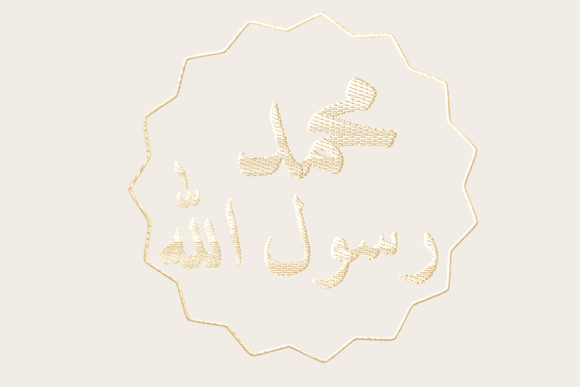
When I opened Muhammad Embroidery Calligraphy for the first time, what struck me wasn’t just its beauty—it was its quiet authority. This isn’t decorative lettering dressed up as meaning; it carries the weight and rhythm of classical Arabic calligraphy while breathing with modern embroidery sensibility. The curves are fluid but intentional, the spacing generous enough to avoid visual crowding, and the overall shape suggests reverence without rigidity. It feels like something you’d choose for a keepsake—not a trend-driven tote, but a hand-stitched pillow cover for a new parent or a linen tea towel gifted at Eid. That mood matters deeply: it sets expectations for how your customer will receive the finished product.
Real-World Testing: From Sketch to Stitched Sweatshirt
Last week, I used Muhammad Embroidery Calligraphy on a custom unisex sweatshirt for a small boutique in Chicago—part of their Ramadan collection. We placed it center-chest, 4.2 inches wide, on midweight cotton-blend fleece. The result? Clean, legible, and deeply respectful. Satin stitch outlines held crisp edges, and the fill stitch density allowed the fabric’s texture to show through just enough—no plasticky heaviness. Customers responded strongly: not just to the design itself, but to how thoughtfully it sat on the garment. That tells me Muhammad Embroidery Calligraphy works best where intention meets wearability—custom apparel, nursery decor, embroidered patches for modest fashion brands, or even subtle apron accents for halal food entrepreneurs.
Where It Shines—and Where It Asks for Care
This design excels on stable, medium-weight fabrics: canvas totes, linen pillow covers, cotton tea towels, structured caps (with proper hooping), and baby bodysuits (when sized appropriately). Its balanced proportions make it adaptable across hoop sizes—but don’t push it below 3 inches wide without testing. On stretchy knits or thin voile, stabilizer choice becomes non-negotiable. A tear-away alone won’t cut it; pair it with light cutaway or a hybrid stabilizer to prevent puckering around those delicate flourishes.
Dark fabrics demand attention to thread contrast—especially in the inner loops and fine terminals. I ran a quick black-and-white mockup before stitching and discovered that charcoal thread on navy lost definition in two tight curves. Switching to off-white improved clarity instantly. Also worth noting: avoid placing Muhammad Embroidery Calligraphy directly over seams, darts, or curved surfaces like cap brims unless you’ve tested the digitization’s flexibility. Some files handle distortion better than others—and since no specific machine compatibility or file format is listed, always verify your embroidery file’s behavior on your machine first.
What This Design Does for Your Craft Business
As an Etsy seller and small shop owner myself, I pay close attention to how a design affects perceived value—and Muhammad Embroidery Calligraphy lifts it. Handmade products with this motif feel more considered, more personal. It signals care—not just in execution, but in cultural and spiritual awareness. That builds trust, especially among Muslim customers seeking meaningful, tasteful representation. For holiday embroidery or personalized gifts, it adds emotional resonance without cliché. And because it reads clearly at multiple scales, it supports cohesive branding: same design, scaled down for a patch, enlarged for a wall hanging, or simplified for a printable mockup preview.
Design Notes Every Embroiderer Should Run Before Stitching
- Test on scrap fabric first—especially if using textured weaves, terry cloth, or lightweight rayon.
- Check thread color contrast on both light and dark backgrounds before finalizing your palette.
- Review stitch density: high-density fills may overwhelm delicate fabrics or require extra stabilizer.
- Confirm hoop size compatibility—some versions may be optimized for 5x7” hoops, others for larger formats.
- Inspect small details under magnification: terminals, junctions, and hairline strokes should digitize cleanly.
- Try a black-and-white mockup to assess tonal balance and silhouette strength.
- Use proper stabilizer—layered or adhesive-backed options often yield cleaner results on curved or uneven surfaces.
- Verify licensing terms before selling finished items or digital embroidery files commercially. Since this falls under Work and Embroidery, confirm whether resale or derivative use is permitted.
Final Thought: Not Just a Design—A Design Decision
Choosing Muhammad Embroidery Calligraphy isn’t about picking another machine embroidery design off a list. It’s choosing how your brand speaks during sacred seasons—how your handmade product honors tradition while fitting seamlessly into modern life. It’s the difference between a generic “Ramadan Mubarak” tote and one that feels like it was made for someone who cherishes both craft and conviction. Use it with respect for its roots, attention to technical detail, and confidence in its quiet power—and your customers will feel that intention in every stitch.